
From Estimate to Paid: A Clean Document Workflow for Small Businesses
September 6, 2026
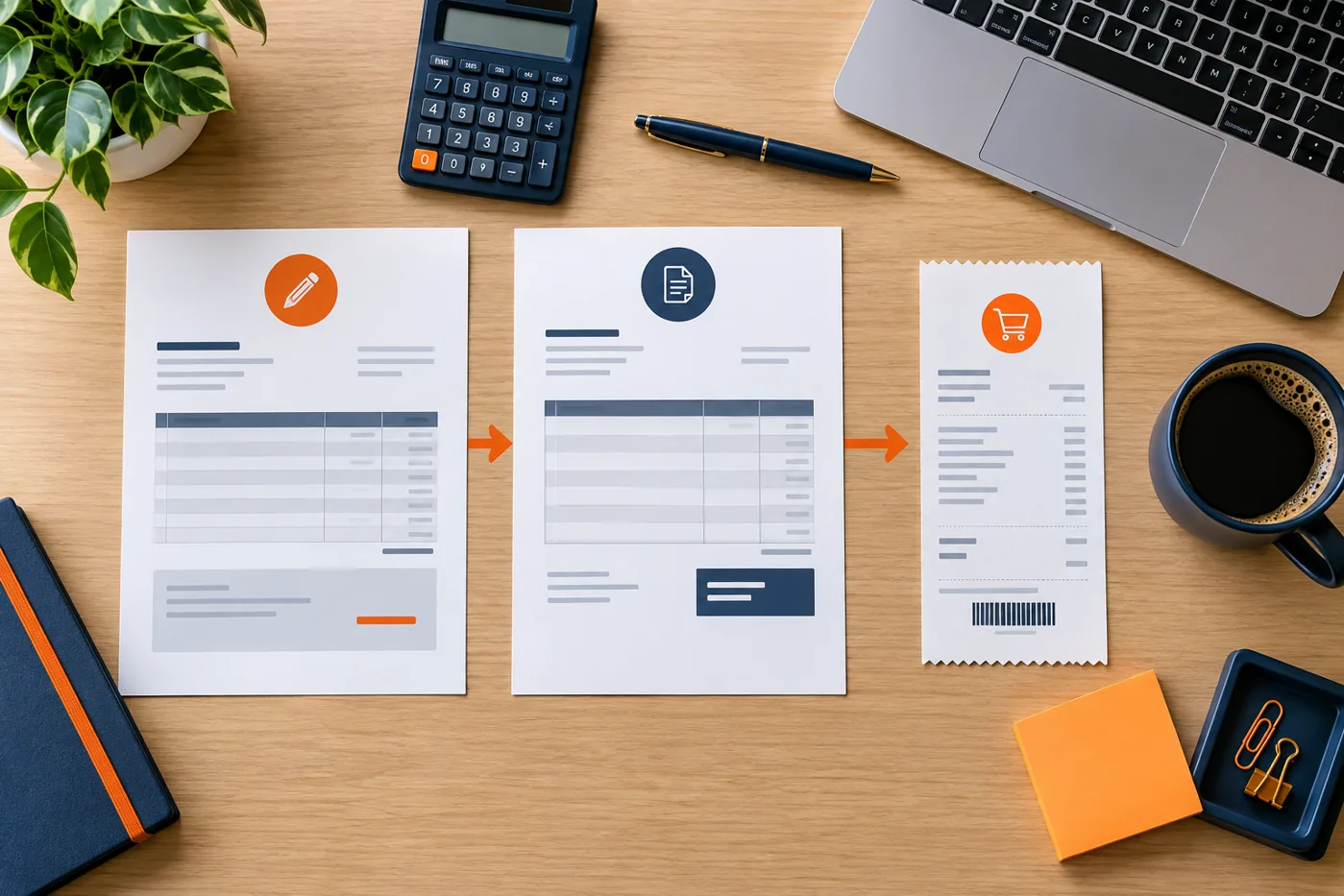
Customers see three documents. Your business should see one connected process. The estimate defines proposed work, the invoice requests payment, and the receipt confirms payment. When each stage uses different names, numbers, or totals, staff waste time explaining discrepancies and the business loses a clean audit trail.
Start with one customer record
Create the customer once with a consistent legal or preferred name, contact details, billing address, and project reference. Use that same record throughout the job. Avoid small variations such as adding a middle initial on one document and a company suffix on another.
Write estimates that reduce disputes
Describe what is included, what is excluded, quantities, labor, parts, tax, expiration date, and the assumptions behind the price. If a price may change after inspection, say what triggers the change. Give the customer a clear way to approve and store evidence of that approval.
Convert approved work into an invoice
Carry forward the accepted items rather than retyping them. Record approved changes separately and preserve the original estimate. The invoice should show a unique invoice number, issue date, due date, payment instructions, business identity, customer identity, line items, discounts, tax, and total due.
Estimate Maker By Pair10, Invoice Maker By Pair10, and Receipt Maker By Pair10 can support the three stages of this workflow. Confirm the current product details and choose only the tools that match how your business operates.
Confirm payment before issuing a receipt
A promise to pay is not payment. Verify the transaction in the cash drawer, bank, or payment processor. Then create a receipt with the paid date, amount, payment method, invoice reference, and any remaining balance. This prevents a receipt from becoming accidental evidence of money that was never received.
Use predictable numbering
A shared job reference connects the documents while separate prefixes clarify their purpose. For example: JOB-1042, EST-1042, INV-1042, and REC-1042. Never recycle a cancelled invoice number. Mark it cancelled and retain it according to the accounting rules that apply to your location.
Run a five-point check
- Customer and business information match.
- Approved scope matches the billed line items.
- Tax, discounts, currency, and totals are correct.
- Due date and payment instructions are current.
- The final PDF is readable on desktop, phone, and print.
Store records so they can be found
Use a consistent folder and filename convention, restrict access to people who need it, and back up records outside the primary device. Reconcile paid invoices to deposits regularly. If a customer calls six months later, staff should be able to find the estimate, approval, invoice, and receipt in minutes.
Frequently asked questions
Can an estimate become an invoice automatically?
It can, but confirm scope changes, dates, and tax before sending. Automation should reduce entry, not remove review.
Should estimates and invoices share a number?
A shared job reference is useful, but unique prefixes and sequences make each document easier to identify.
How long should records be kept?
Retention rules vary by country, state, and business type. Ask a qualified accounting or legal professional about your obligations.